

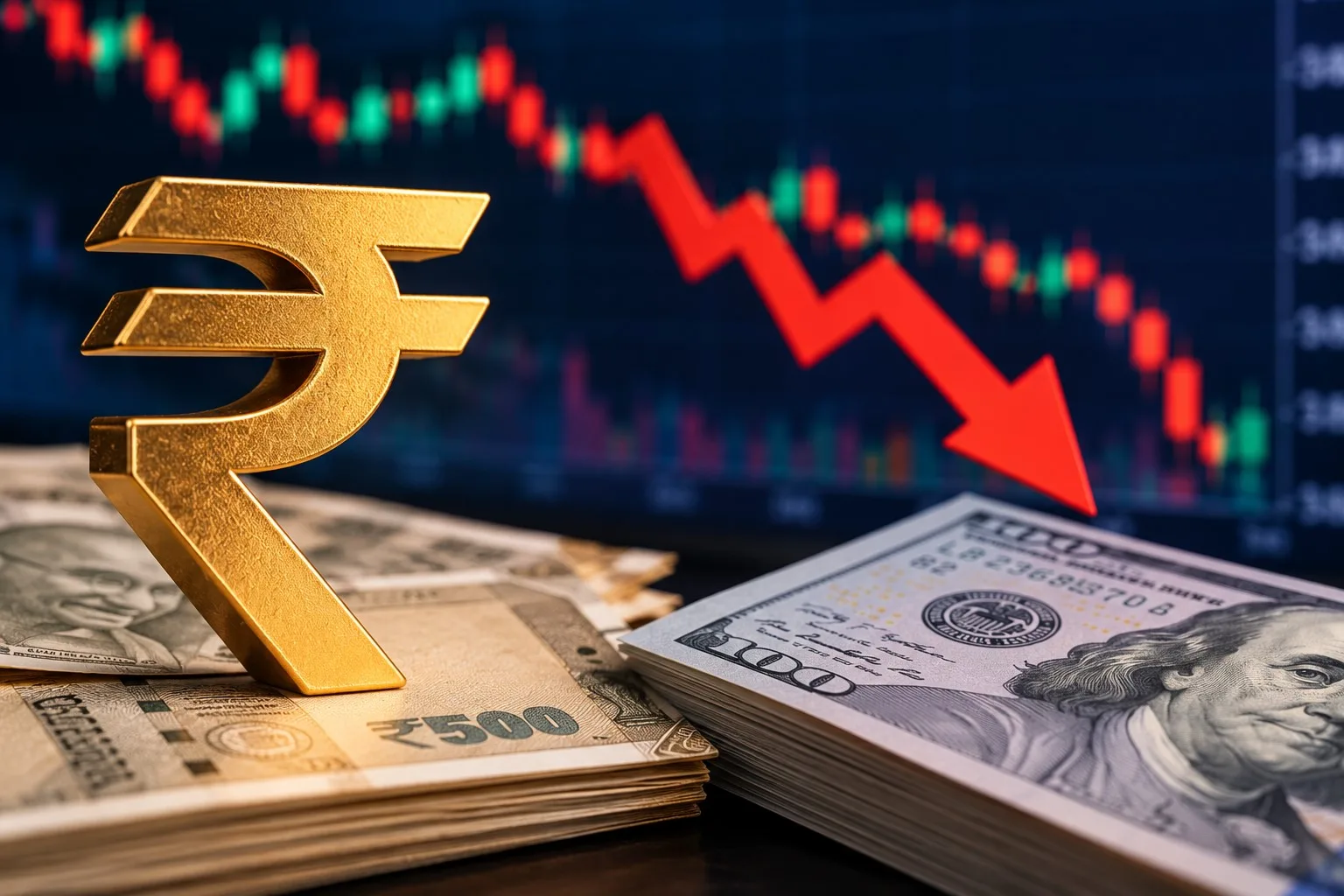
The Indian rupee closed lower against the US dollar on Wednesday, October 28, 2026, with the currency quoted at 95.5175 per dollar, compared with its previous closing level of 95.0500. The move represented a depreciation of 0.4675, or approximately 0.49%, against the US currency.
The rupee's decline came amid continued pressure on Indian financial markets from elevated crude oil prices and a firm US dollar. Developments in global oil markets and expectations surrounding the US Federal Reserve's monetary policy decision remained key factors for currency traders during the session.
Rupee Depreciates 0.49% Against Dollar
The rupee's closing level of 95.5175 per dollar marked a weaker finish compared with the previous session. A higher USD/INR exchange rate indicates that more rupees are required to purchase one US dollar.
Currency indicator | Level |
|---|---|
Trading date | October 28, 2026 |
Previous close | 95.0500 |
Reported closing rate | 95.5175 |
Change | -0.4675 |
Percentage change | -0.49% |
The depreciation reflects the difference between the two reported closing rates. The figures above are based on the supplied market data and should be checked against the relevant spot or exchange-traded currency quote before publication.
Rising Crude Oil Prices Put Pressure on Rupee
Crude oil prices remained an important factor for the Indian currency. Brent crude futures rose above $115 per barrel on Wednesday following renewed concerns about global oil supplies after an attack on a Saudi Arabian refinery.
Higher oil prices can increase India's import bill because the country relies heavily on imported crude oil. Oil importers generally require US dollars to pay international suppliers, creating additional demand for the currency when import costs rise.
An increase in the cost of energy imports can also affect India's trade balance and inflation outlook. These factors make movements in international crude oil prices particularly important for the rupee.
US Dollar Strength and Federal Reserve Decision in Focus
Currency traders were also monitoring the US Federal Reserve's monetary policy announcement, scheduled for after Indian market hours on Wednesday.
The Federal Reserve's interest-rate outlook can influence the relative attractiveness of dollar-denominated assets. Expectations of higher US interest rates or a more restrictive monetary policy can support the dollar and put pressure on emerging-market currencies.
Market participants were looking for guidance on the future direction of US interest rates, inflation and Treasury yields. Changes in these expectations can influence international capital flows and demand for currencies such as the Indian rupee.
RBI Intervention Remains a Market Factor
The Reserve Bank of India was also in focus as traders assessed the central bank's potential role in limiting sharp movements in the currency.
Market reports indicated that state-run banks were selling US dollars during Wednesday's trading session, possibly on behalf of the RBI. Such activity can help increase dollar supply in the domestic foreign exchange market and moderate pressure on the rupee.
However, the reported intervention was not officially confirmed. The RBI's foreign exchange operations are generally intended to manage excessive volatility rather than guarantee a particular exchange-rate level.
What Influences the Rupee-Dollar Exchange Rate?
The USD/INR exchange rate is influenced by several domestic and international factors:
Crude oil prices: Higher oil prices increase the cost of India's energy imports and can raise demand for dollars.
US dollar movements: A stronger dollar can put pressure on emerging-market currencies.
Interest-rate expectations: Differences between Indian and US interest rates can influence capital flows and currency demand.
Foreign investment flows: Purchases and sales of Indian equities and bonds by overseas investors can affect demand for rupees and dollars.
RBI operations: Central bank purchases or sales of foreign currency can influence short-term market conditions.
Geopolitical developments: Conflicts and disruptions to energy supplies can affect oil prices, investor sentiment and currency markets.
These factors provide context for the rupee's movement, but the daily change in the exchange rate cannot be attributed to any single factor without further evidence.
Outlook for the Currency Market
Currency traders were watching crude oil prices, movements in the US dollar and the Federal Reserve's policy announcement for further direction. Developments in foreign investment flows and any additional RBI action were also relevant to domestic currency trading.
The immediate impact of these factors would depend on subsequent market movements and policy developments. The reported closing rate should be distinguished from intraday quotations and exchange-traded USD/INR futures prices, which can differ from the interbank spot-market rate.
Disclaimer: candlesticks.in is an educational and informational platform only. Nothing published on this website should be treated as a buy, sell, or hold recommendation. Investments in the securities market are subject to market risks; read all related documents carefully before investing. Please consult a SEBI-registered financial advisor before making any investment decisions.