

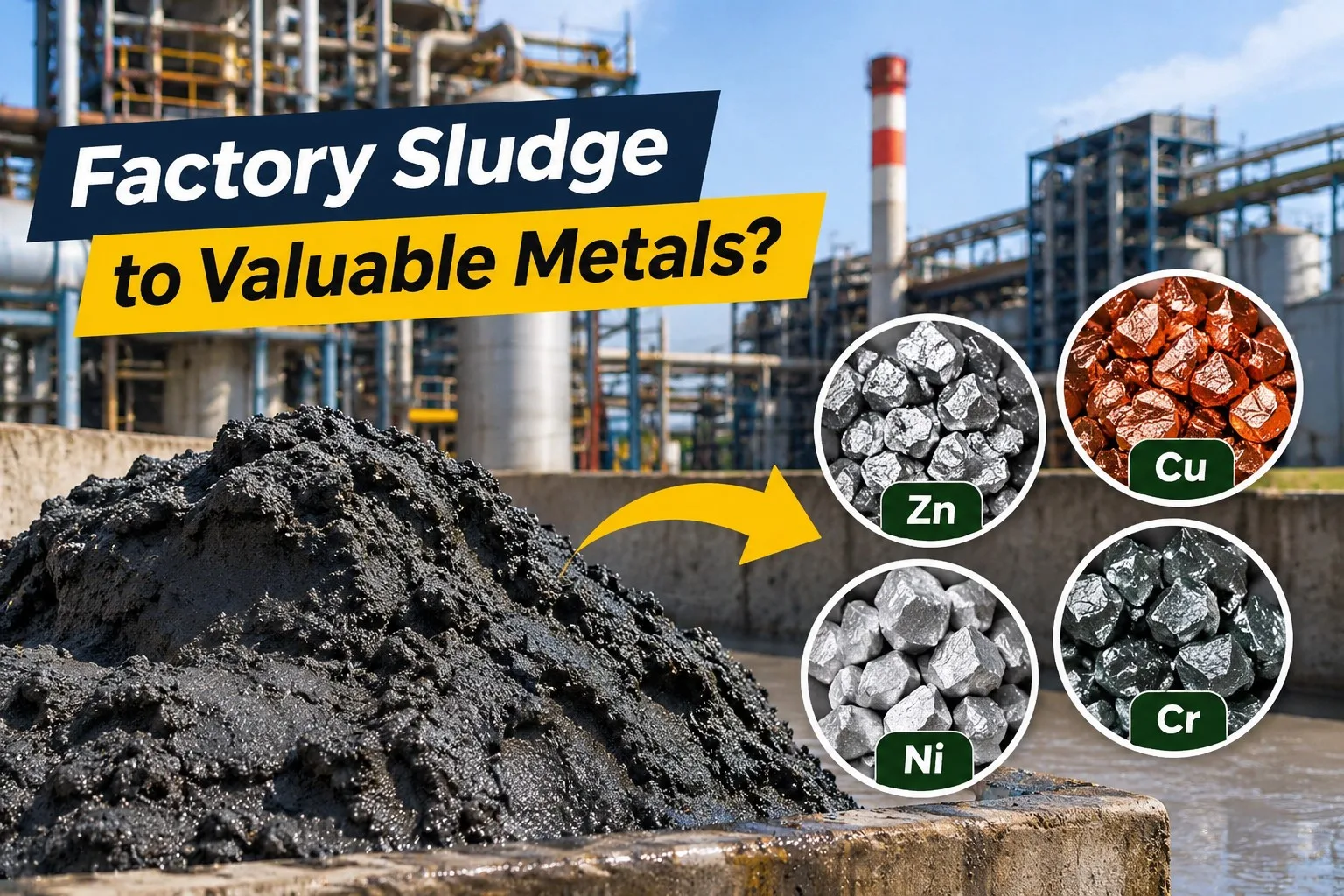
India's industrial waste problem could also represent an overlooked opportunity for the country's manufacturing and metals industries. Every year, factories generate large quantities of sludge, dust, spent chemicals and processing residues that may contain recoverable metals. Much of this material is treated as waste, even when it carries commercially useful quantities of valuable elements.
As India expands its manufacturing capacity, demand for metals such as copper, zinc, nickel, chromium and lead is expected to remain important across industrial sectors. Recovering these materials from existing industrial waste could create an additional source of raw materials without depending entirely on fresh mining. This is where a relatively specialised industrial activity called urban mining and industrial waste recovery enters the picture.
The opportunity is not simply about recycling scrap metal. It involves extracting metals from materials that factories have traditionally found difficult, expensive or technically challenging to process.
India's Industrial Waste Has a Hidden Metal Economy
The scale of the opportunity becomes clearer from India's waste-generation figures. According to the Central Pollution Control Board's National Inventory for 2023–24, approximately 89,301 industrial units generated 18.51 million tonnes of hazardous waste during the year. Around 10.06 million tonnes, or 54.35%, was managed through recycling, utilisation and co-processing.
These figures cover several categories of hazardous waste, not just metal-bearing sludge. However, they highlight the size of the industrial waste-management ecosystem already operating in India. A specialised recovery industry could build on this infrastructure by identifying waste streams that contain metals worth extracting.
Industrial sludge is particularly interesting because its composition depends on the manufacturing process. Metal plating units, electroplating factories, steel plants, zinc smelters, copper processors and chemical manufacturers can generate residues containing different combinations of metals and minerals.
For example, electroplating sludge may contain nickel, copper, chromium and zinc. Zinc-processing residues can contain recoverable zinc, while copper smelting residues may retain iron and other commercially useful materials. The actual metal concentration varies significantly between factories and batches.
How Factories Can Turn Sludge into Raw Materials
The process begins with identifying the metal content of industrial waste. Samples are tested to determine the concentration of different elements, their chemical form and the presence of contaminants. This step is important because two factories producing apparently similar sludge may generate materials with very different recovery economics.
Once the composition is established, specialised processing techniques can separate valuable materials. Physical beneficiation, chemical leaching, filtration, precipitation and high-temperature processing are among the methods used, depending on the type of waste.
In hydrometallurgical processing, chemicals are used to dissolve selected metals from the waste. The metals are subsequently separated from the solution and converted into products such as metal salts, oxides or, where technically and economically feasible, refined metals.
Some waste streams may also be suitable for high-temperature recovery processes. These technologies can extract metals that remain trapped in industrial residues after the primary manufacturing process. The remaining material may have further applications, provided it meets the required environmental and product standards.
Real Examples: India's Industrial Waste Is Already Producing Metals
The concept is not limited to laboratory experiments. Indian companies and research institutions have already demonstrated ways to extract commercial value from metallurgical residues.
1. Hindustan Zinc: Recovering Zinc, Lead and Silver from Jarosite
Company-reported industrial example
Hindustan Zinc has developed a zinc fumer facility at its Chanderiya smelter to recover metals from jarosite, a residue generated during zinc processing. The technology uses high-temperature processing to recover materials that would otherwise remain in the waste stream.
The company reports annual recovery of approximately 3,000 tonnes of zinc, 4,700 tonnes of lead and 33 tonnes of silver through this process. It also reports reducing jarosite generation by around 40,000 tonnes annually, while the remaining slag is supplied to the cement industry.
This is an important example of how industrial waste can become a secondary source of multiple metals rather than simply a disposal problem.
2. CSIR-National Metallurgical Laboratory: Recovering Products from Copper Slag
Research-to-commercialisation example
The CSIR-National Metallurgical Laboratory has developed a process to convert copper slag into ferric or ferrous sulphate products and silica powder. Copper slag is generated during copper production and can retain materials that have additional industrial applications.
The technology profile reports that processing one tonne of copper slag can produce approximately 5 kilolitres of a 35% ferric sulphate solution and around 300 kg of silica powder. Ferric sulphate has applications in water treatment, while silica has industrial uses.
The technology is listed as commercialised, demonstrating that the value of metallurgical waste need not be restricted to recovering the original metal.
3. CSIR-IMMT: Extracting Value from Metallurgical Waste
The CSIR-Institute of Minerals and Materials Technology has worked on recovering iron fines from washery tailings, processing solid waste from steel plants and extracting nickel values from chromite overburden.
Its work includes physical beneficiation and briquetting of fine industrial residues. These processes can help recover useful materials and return suitable processed waste to industrial operations.
The examples show that India's industrial waste-recovery opportunity extends beyond conventional recycling. It also includes recovering metals and minerals that were not fully extracted during the original production process.
Steel Slag, Zinc Residues and Electroplating Sludge: Where the Opportunity Exists
Electroplating and metal finishing sludge
Nickel, copper, zinc and chromium-bearing residues can become potential feedstock for specialised recovery facilities. Small plating units may find it difficult to invest in individual metal-recovery systems.
Zinc smelter residues
Jarosite, zinc dross and other process residues can contain zinc, lead, silver and other elements. Large smelters may find value in recovering materials from accumulated residues.
Copper slag
Copper slag can contain iron-bearing compounds and silica, alongside residual metals. Recovery and material utilisation depend on its composition and processing economics.
Steel plant waste
Steel slag and other steelmaking residues can contain recoverable metallic iron and other useful materials. Processing can separate metal-bearing fractions and prepare suitable remaining material for industrial use.
The steel industry offers another indication of the scale involved. According to CSIR, India generates approximately 19 million tonnes of steel slag annually. This figure is expected to increase to around 60 million tonnes by FY2030 as domestic steelmaking capacity expands.
Not all steel slag is suitable for metal extraction, and a significant share already goes through metal recovery or other utilisation routes. However, the volume makes improved separation, processing and reuse economically important.
Could a New Business Emerge Around Factory Sludge?
One interesting possibility is the emergence of specialised companies that collect, test, process and sell metal-bearing industrial residues. Instead of every factory investing in expensive recovery equipment, several manufacturers could supply their waste to a centralised processing facility.
Such a business would operate differently from a conventional scrap dealer. Its primary activity would be identifying the chemical composition of waste, determining its recoverable metal value and selecting the most economical processing route.
For example, a facility located near an industrial cluster could receive sludge from electroplating units, metal-finishing factories and engineering companies. After laboratory testing, materials could be separated into compatible processing categories rather than mixed together.
The recovered metals or metal compounds could then be supplied to manufacturers, chemical producers, metal refiners and other industrial buyers. The business could earn revenue through processing charges, recovered material sales or contractual arrangements with waste-generating factories.
Three Possible Business Models
1. Centralised metal recovery facilities
A company establishes a processing plant near a manufacturing cluster and collects suitable waste from multiple factories. This model could reduce the need for individual manufacturers to build their own recovery infrastructure.
2. Waste testing and metal aggregation
A smaller company focuses on laboratory testing, waste classification, collection and aggregation. It supplies consistent, tested feedstock to larger metal recovery plants rather than operating complex extraction equipment itself.
3. Technology-led recovery services
A specialised engineering company develops recovery processes for specific industrial residues. It can work directly with steel plants, smelters, chemical manufacturers and electroplating businesses to improve metal recovery from their existing waste streams.
These models are possible business structures, not evidence that every industrial cluster can support a profitable recovery facility. Feedstock quality, supply contracts and actual metal recovery rates will determine commercial viability.
Why This Business Is Not Easy to Build
Despite the opportunity, metal recovery from industrial sludge is not a straightforward recycling business. The economics depend heavily on the concentration of recoverable metals, the cost of chemicals, electricity consumption, transportation and the efficiency of the extraction process.
A factory producing sludge with a high concentration of nickel or copper may offer an attractive recovery opportunity. Another factory generating a similar quantity of sludge may have very little recoverable metal. Without proper testing, a recycling company could end up spending more on processing than the value of the materials recovered.
There are also environmental and regulatory responsibilities. Certain metal-bearing residues are classified as hazardous waste under India's Hazardous and Other Wastes (Management and Transboundary Movement) Rules, 2016. Collection, transportation, storage, treatment and recycling must comply with applicable authorisations and pollution-control requirements.
Heavy metals such as lead, cadmium and chromium also require careful handling. Improper chemical extraction can generate contaminated wastewater, toxic emissions and additional hazardous residues. A commercially successful operation must therefore account for the treatment and disposal of its secondary waste.
Another challenge is securing a consistent supply of industrial waste. Factories may change production processes, suppliers or treatment methods, affecting the composition of their sludge. Recovery companies will need long-term supply agreements and quality-testing arrangements to maintain predictable operations.
Could Industrial Waste Reduce India's Dependence on Imported Metals?
India's demand for industrial metals creates an additional reason to examine secondary raw materials. Manufacturers require metals for electrical equipment, automotive components, construction materials, machinery and specialised industrial products.
Recovering metals from domestic industrial residues could supplement supplies from mining and conventional recycling. It could also reduce the amount of valuable material lost during manufacturing and metal-processing operations.
However, industrial sludge recovery cannot replace primary mining. The quantity and quality of recoverable metals are limited by the original manufacturing processes, and not every waste stream contains commercially useful concentrations.
The more realistic opportunity is to develop an additional domestic supply channel that captures metals currently lost in industrial processes. This could become particularly relevant for materials where recovery costs are lower than the cost of sourcing equivalent raw materials.
The Next Opportunity May Be Hidden in Industrial Clusters
India's industrial clusters provide a potential foundation for this business. Manufacturing centres in Gujarat, Maharashtra, Tamil Nadu, Karnataka, Telangana and other industrial states contain concentrations of engineering, chemical, metal-processing and manufacturing businesses.
A specialised recovery company could study the waste streams generated within one cluster before investing in a processing facility. Rather than attempting to recover every possible metal, it could focus on one commercially attractive category, such as nickel-bearing sludge, zinc residues or copper-processing waste.
This approach could also create opportunities for smaller technology companies, chemical engineers, environmental service providers and industrial waste-management businesses. They would not necessarily need to operate large metal smelters to participate in the supply chain.
The business opportunity lies in connecting three previously separate activities: industrial waste management, metal recovery technology and secondary raw material distribution.
India already has examples of companies recovering metals from metallurgical residues. The next stage could involve extending these technologies to more specialised and smaller industrial waste streams, where individual factories may not have the scale or expertise to recover the materials themselves.
Factory sludge may never become a substitute for conventional mineral resources. But as industrial production expands, the ability to identify, extract and commercially reuse metals hidden inside manufacturing waste could become an important part of India's future raw material ecosystem.