

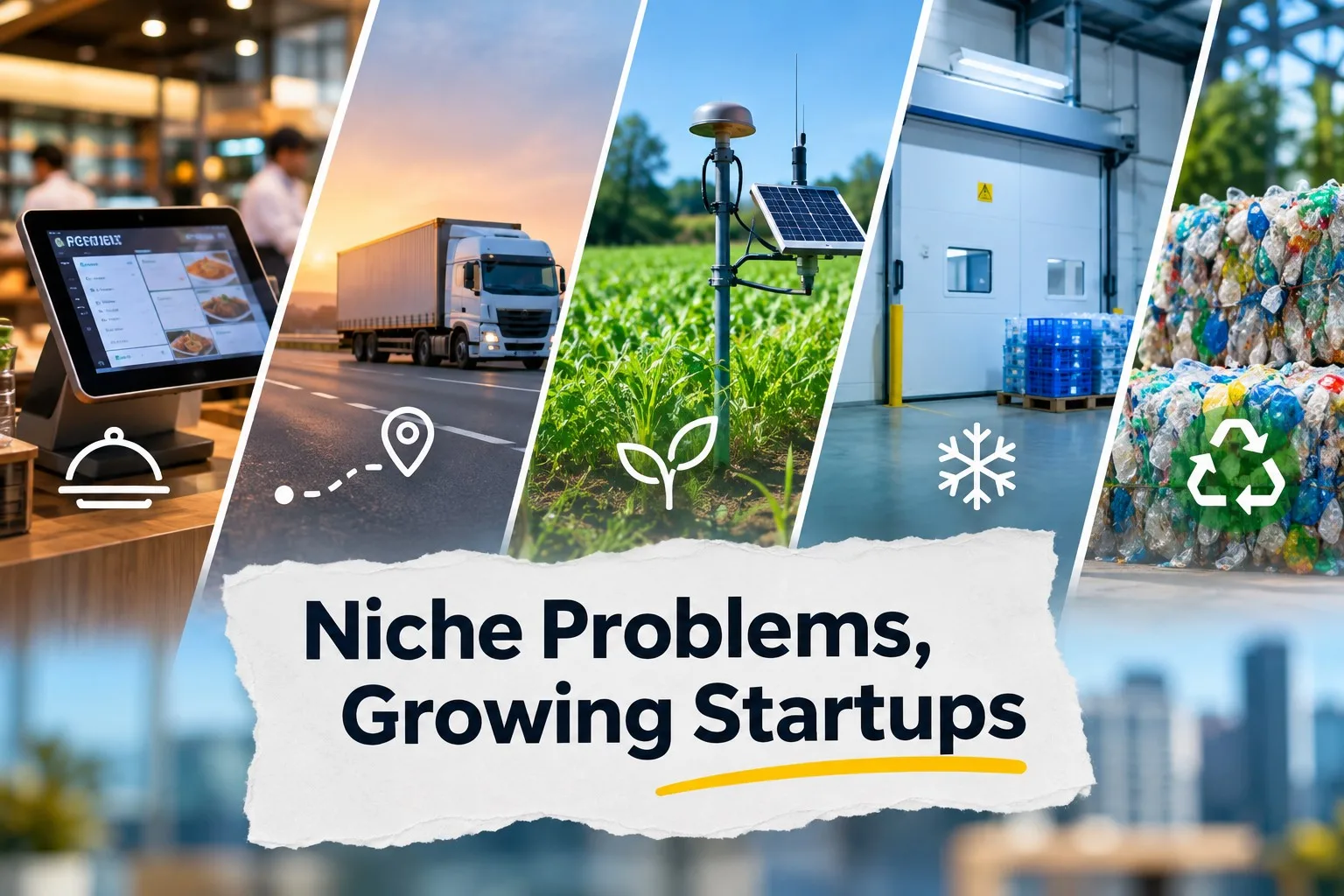
From restaurant management software and factory operations to specialised logistics and waste management, a new group of businesses is finding opportunities in industry-specific problems that larger technology companies often leave unaddressed.
Some of the most interesting business opportunities are not emerging from industries that attract the most attention. They are developing around everyday operational problems that businesses have struggled with for years.
A restaurant owner managing kitchen orders, a warehouse operator tracking frozen inventory, or a factory manager coordinating equipment maintenance may not need another large technology platform. They need a solution that understands their specific workflow and makes daily operations easier. This is where smaller, specialised companies are finding room to grow.
The opportunity is based on a simple business reality. A problem that appears too narrow for a large corporation can become a meaningful market for a company that focuses entirely on solving it.
Why Large Companies Often Overlook Smaller Business Problems
Large technology companies generally build products for broad customer segments. Their business models depend on reaching thousands of customers through standardised products, large contracts and repeatable sales processes. Developing a separate product for a small industry segment may not generate enough revenue to justify the investment.
The economics become more complicated when customers require customised features, local support, industry-specific integrations and frequent product changes. A large software provider may find it difficult to justify these costs for a relatively small customer base, even when the problem is genuine.
For a startup, however, the same market can offer an attractive starting point. It can concentrate on one type of customer, understand the operational details and develop a product that addresses a specific business requirement rather than attempting to serve every industry.
Industry-Specific Software Is Creating New Business Opportunities
One of the clearest examples is the growth of vertical software, commonly known as vertical SaaS. Unlike general business applications that serve multiple industries, vertical SaaS products are designed around the requirements of a particular sector.
Restaurant software, for instance, needs to handle kitchen order tickets, menu changes, table management, inventory and online orders. A general accounting application may manage invoices and expenses, but it cannot necessarily coordinate the entire restaurant operation.
Indian company Petpooja illustrates how this specialised approach can develop into a larger business. It began with restaurant point-of-sale software and expanded into related functions such as inventory, purchasing, payroll and business operations. The company says more than 1.5 lakh businesses across India, the UAE and South Africa use its platform.
The opportunity is not limited to restaurants. Facilio, founded in 2017, developed software for property and facility operations, including maintenance scheduling, asset management, service requests, inspections and contractor coordination. Its platform addresses the operational requirements of commercial buildings, retail locations, healthcare facilities and other property portfolios.
Facilio reports that its technology covers 25,000 buildings and has more than 50 global partners. Its growth illustrates how an area that might appear to be a narrow part of the real estate industry can support a specialised technology business.
Small Operational Gaps in Logistics Can Become Large Markets
Logistics is another industry where everyday problems create opportunities for specialised companies. Transporting goods is only one part of the process. Businesses also need to coordinate vehicle availability, freight procurement, shipment tracking, delivery confirmation, documentation and payments.
These activities often involve several independent parties, including manufacturers, transport companies, fleet owners and logistics service providers. When information is scattered across different systems, businesses can struggle to understand where a shipment is, why a delay has occurred or whether a delivery has been completed.
Freight Tiger is an Indian example of a company working in this segment. Its platform connects enterprise shippers, logistics service providers and fleet owners through transportation management, freight intelligence and marketplace services. The company reports enabling around 18 million trips annually, representing approximately 5% of India's full-truckload freight.
The example highlights an important business opportunity in industries where transactions are frequent but coordination remains difficult. A specialised platform does not need to replace the entire logistics industry. It can build value by improving the information exchange and operational processes between the participants.
Agriculture Has Opportunities Beyond Farm Equipment and Marketplaces
Agriculture technology is often associated with farm machinery, online marketplaces and agricultural input sales. However, several smaller operational requirements remain important, particularly when decisions depend on local soil conditions, weather and crop stages.
Farmers growing different crops cannot always depend on broad agricultural recommendations. Irrigation requirements, pest risks and disease conditions can vary across locations and even between fields. This creates demand for tools that provide farm-level information instead of relying entirely on general forecasts.
Bengaluru-based Fasal is working in this specialised area. Its technology combines farm sensors, data analytics and software to monitor microclimatic conditions and provide crop-specific information. The system can help farmers make decisions related to irrigation, fertigation and the timing of preventive measures against pests and diseases.
This type of business addresses a specific operational requirement rather than attempting to digitise every part of agriculture. Similar opportunities exist in crop-specific advisory services, soil monitoring, agricultural equipment maintenance and cold storage management.
Specialised Service Providers Are Solving Problems That Businesses Do Not Want to Handle Internally
Not every opportunity requires building a software product. In several industries, businesses are turning to specialised service providers to manage operational activities that are expensive or difficult to maintain independently.
Cold-chain logistics is one example. Frozen food and ice cream companies need temperature-controlled storage, inventory management, careful order picking and reliable transportation. A conventional warehouse may not have the infrastructure or operating procedures required for these products.
Indian company FroGo has positioned itself as a technology-enabled cold-chain fulfilment partner for frozen food and ice cream brands. Its services cover warehousing, inventory and dispatch, while its own warehouse management system supports activities such as batch management, stock tracking and scan-based picking.
This model allows a specialised service provider to combine infrastructure, operational knowledge and technology. Instead of investing in cold storage and distribution capabilities in every market, a brand can work with a provider that already understands the requirements of frozen products.
Waste management is another area where specialised companies are building business models around overlooked processes. The movement of recyclable material involves waste generators, collection agencies, aggregators, processors, recyclers and brands. Coordinating these participants and maintaining transaction records can be difficult when activities are handled through disconnected systems.
Hyderabad-based Recykal is working on this problem through a digital waste-management ecosystem. Its platform connects stakeholders across the recycling value chain, while its services also support businesses with Extended Producer Responsibility (EPR) processes and waste traceability.
These examples show that specialised service businesses can create opportunities by taking responsibility for a process that other companies may not have the expertise, infrastructure or resources to manage themselves.
Why These Businesses Can Build Sustainable Revenue
The strength of a niche business often comes from how frequently the customer experiences the problem. A restaurant may need its billing and kitchen management system throughout the day. A logistics company may track hundreds of shipments, while a property operator needs regular maintenance and inspection records.
When a product becomes part of daily operations, replacing it can involve training employees, transferring data and changing established workflows. This can create long-term customer relationships, provided the provider continues to deliver reliable service and useful improvements.
Revenue models can also vary depending on the problem. Software companies may charge monthly or annual subscriptions, while specialised service providers can earn through transaction fees, warehousing charges, fulfilment contracts or ongoing service agreements. Some businesses combine software subscriptions with operational services to offer a complete solution.
However, a narrow market does not automatically guarantee a profitable business. Startups still need to establish how many potential customers exist, whether they are willing to pay, how expensive customer acquisition will be and whether the service can be delivered consistently.
Where Founders Can Find the Next Set of Opportunities
Many overlooked business problems are visible in routine activities rather than in major industry announcements. Manufacturers managing machine maintenance through spreadsheets, distributors coordinating orders over WhatsApp, and service companies tracking employee visits manually are examples of workflows where a specialised solution may have commercial value.
The important step is to identify a problem that occurs frequently and has a measurable business cost. Delayed payments, inventory mismatches, repeated manual data entry, equipment downtime and compliance documentation are examples of operational issues that can affect business performance.
Founders also need to understand the customer before developing the product. Speaking with business owners, employees and industry operators can reveal why existing software is not being used, which tasks consume the most time and what customers would actually pay to improve.
The strongest opportunities may not come from building a product for an entirely new industry. They may come from improving one neglected process within an established industry, where customers already spend money trying to manage the problem.
For startups, the market does not always have to be large at the beginning. A narrowly defined customer group, a recurring operational problem and a solution that customers are willing to pay for can provide the foundation for a business. As companies build expertise and earn customer trust, they can gradually expand into related workflows and adjacent markets.