
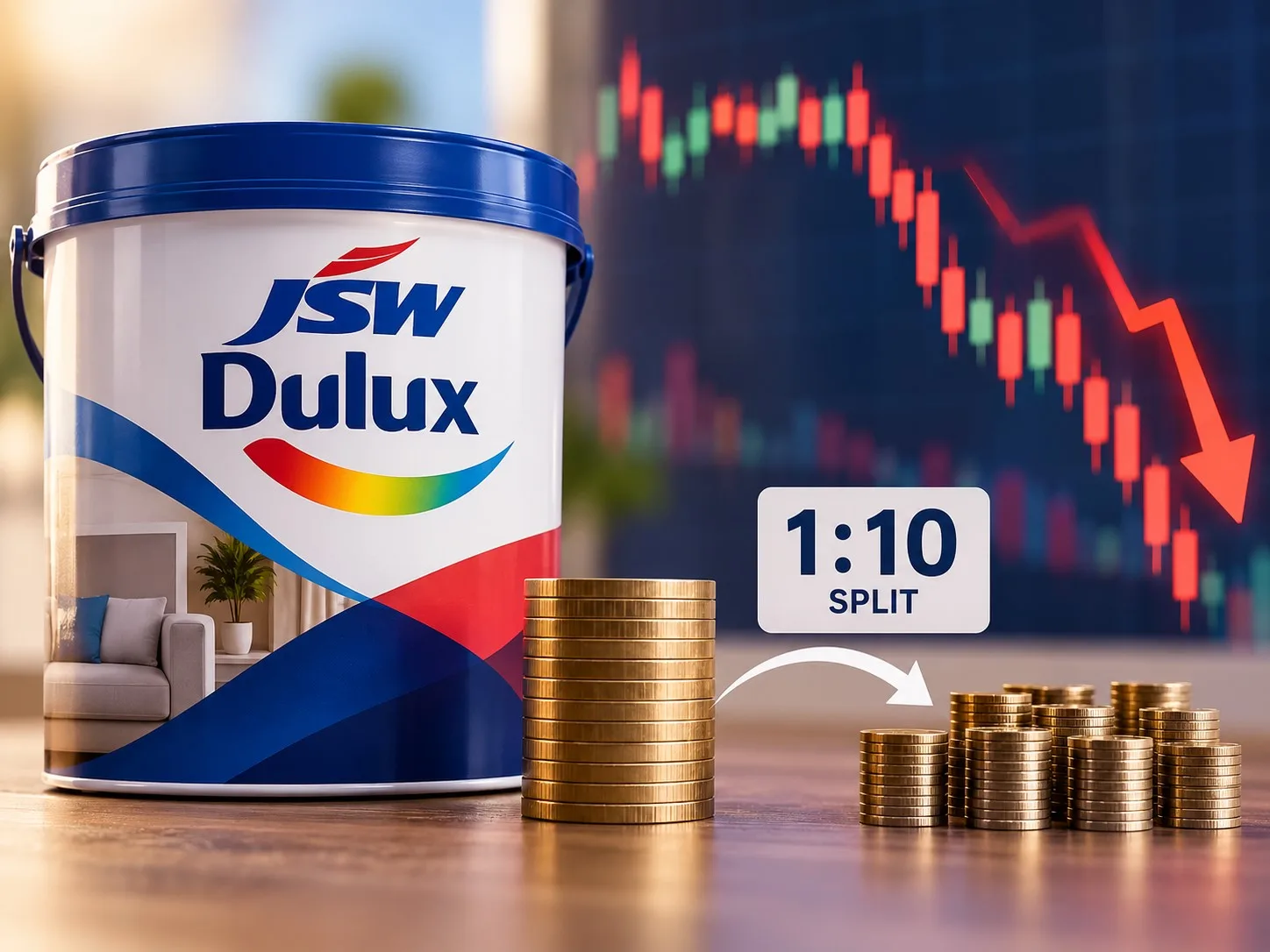
JSW Dulux shares are displaying a fall of nearly 90% on some stock market apps on October 22, 2026. However, the sharp decline is linked to the company's 1:10 stock split, not an equivalent loss in investor wealth.
Shares of JSW Dulux Ltd, formerly known as Akzo Nobel India Ltd, began trading on a split-adjusted basis on Thursday. Under the corporate action, each existing equity share with a face value of ₹10 has been subdivided into 10 shares with a face value of ₹1 each.
The adjustment has caused confusion among investors, with some market data platforms displaying losses of almost 90% because they are comparing the new share price with the previous, unadjusted price.
JSW Dulux share price: Is the stock up or down today?
Market data available during Thursday's session showed JSW Dulux trading around ₹300 per share after the split. Value Research reported a price of ₹301.70 at 11:24 am, alongside a displayed decline of 89.93%.
MarketScreener also showed a decline of approximately 90% in its one-day performance figures. These headline changes should not be interpreted as the stock's actual split-adjusted performance.
The previous closing price of around ₹2,994.80, when divided by 10 to account for the stock split, translates to approximately ₹299.48 per share. Against that reference, a price of ₹300 would indicate a marginal gain of around 0.17%, rather than a 90% crash.
Actual gains or losses depend on the latest traded price and the appropriate split-adjusted reference price.
How the 1:10 stock split affects investors
JSW Dulux fixed October 22, 2026, as the record date for its 1:10 stock split. The move increases the number of shares held by eligible shareholders while proportionately reducing the price per share.
For example, an investor holding one share worth ₹3,000 before the split would hold 10 shares worth approximately ₹300 each after the adjustment, assuming no market movement.
The total investment value would remain approximately ₹3,000. The stock split does not, by itself, increase the value of an investor's holdings or change the company's overall market capitalisation.
What should investors watch?
Investors should check whether their trading platform has adjusted the previous closing price and historical returns for the stock split. The quantity of shares credited to eligible demat accounts should also be verified.
The corporate action may make individual shares more affordable and improve trading accessibility. However, it does not change the company's underlying earnings, business prospects or valuation on its own.
Investors evaluating JSW Dulux should therefore focus on its split-adjusted share price, financial performance and valuation rather than the misleading percentage change displayed by an unadjusted data feed.
Bottom line: JSW Dulux's apparent 90% decline on October 22 is a stock-split adjustment issue. Based on the reported prices, the stock was trading broadly around its split-adjusted reference level, with the exact intraday gain or loss depending on the latest quote.
Data note: Prices cited are from market data available during the October 22, 2026, trading session and may change throughout the day.